News

Outdoor Cabinet Selection and Procurement Guide?

2025-12-04 0 Leave me a message

1. Materials and Compatible Scenarios

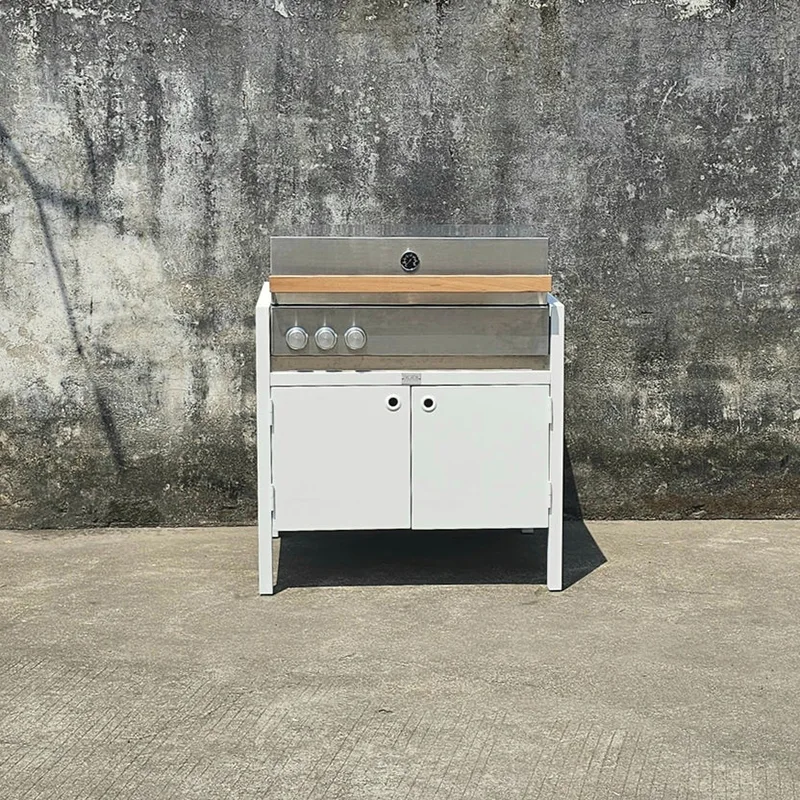
304 stainless steel: Corrosion-resistant, easy to clean, structurally stable, suitable for high-humidity, near-sea salt spray, sun exposure and rain environments. Customizable deep blue lacquered door panels and other appearances, supporting handleless minimalist design and built-in barbecue area and other integrated designs, with low maintenance costs, suitable for home outdoor kitchens and courtyard bars.


Aluminum alloy frame + quartz stone countertop: Aluminum alloy has the advantages of being waterproof and weather-resistant, while quartz stone countertops are hard and stain-resistant. The modular system is convenient for customizing size and layout, and is suitable for scenarios that pursue lightweight, modern appearance and quick installation.


Solid wood (sheltered environment) : It has a strong natural texture and performs well in covered/semi-outdoor Spaces. Regular maintenance (oil wax/wood oil) is required to delay weathering and fading.


Polymers/engineering plastics: Overall waterproof, weather-resistant, lightweight, and have been growing rapidly in recent years. It is suitable for projects with high requirements for weather resistance and maintainability, as well as those with sensitive budgets.


Stone (quartz stone/granite) : Preferred for countertops or washbasins, scratch-resistant and wear-resistant. However, as a "full cabinet", it has relatively low mobility and styling freedom, and is more suitable for fixed countertops or niches.


2. Key Structures and Functional Configurations

Cabinet body and floor: Give priority to choosing a waterproof cabinet structure (moisture-proof layer, edge banding, drainage/wiring hole design). It is recommended that the feet be adjustable + moisture-proof pads, and splash-proof skirts be added when close to the ground.


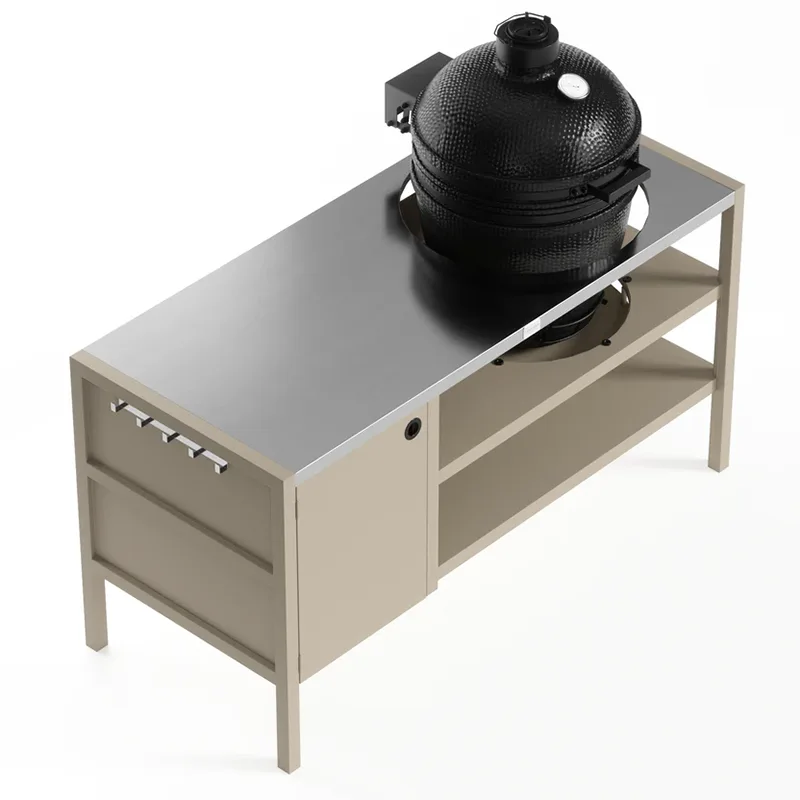
Countertop: Preferred materials such as quartz stone and granite that are scratch-resistant and heat-resistant; If you need to embed a barbecue grill/sink/refrigerator, make sure that the countertop holes, load-bearing capacity and heat dissipation/waterproofing details are all in place.


Door panels and hardware: For outdoor use, it is recommended to hide the handle/no handle and use damping hinges/guides to reduce dust accumulation and cleaning dead corners. In high-humidity environments, stainless steel hinges/guides or hardware with high anti-rust grades are preferred.


Storage and expansion: Can be integrated with drawers, pull-out trash cans, folding faucets, sinks, etc. The structure with a pull-out desktop can expand the operating surface within a limited space, enhancing the flexibility of use.


Mobility and Protection: When occasional movement or cleaning is required, a model with self-locking casters and spring buffers can be selected to balance mobility and durability. 256


3. Size and Layout Suggestions

Operation triangle: The efficient working triangle is formed by the barbecue/stove - sink - refrigerator. The clear width of the channel is recommended to be ≥90 cm for single-person operation or ≥120 cm for two-person collaboration.


Height reference: Based on the user's height, the common height of the countertop is 80 to 90 cm. The sink area can be slightly lowered by 2 to 5 cm to enhance comfort.


Depth and door type: The commonly used depth for base cabinets is 55 to 60 cm. The depth of the wall cabinet is 30 to 35 cm. It is recommended that the door panels be fully covered to reduce the infiltration of rain.

Modularization and corners: Prioritize modular systems to adapt to different sites; The corner can be equipped with a flying saucer plate or a magic corner to enhance the efficiency of retrieving items.

Water and electricity reservation: Plan in advance the locations of water supply and drainage points, waterproof sockets, gas/smoke exhaust paths and condensate water discharge to ensure that they match the interfaces of cabinets, countertops and electrical appliances.


4. Key Points for Installation and Maintenance

Foundation and drainage: The floor should be level and have smooth drainage. It is recommended to apply a waterproof and moisture-proof layer against the wall or floor, and set up a drip tray or drainage channel under the washbasin.


Fixation and wind resistance: In areas with high wind pressure, it is fixed with expansion bolts/anchor bolts. Anti-seepage sealing is used at the connection between the countertop and the wall/cabinet.

Cleaning and maintenance: Use neutral detergent and soft cloth for stainless steel. Aluminum alloy should avoid strong alkali. Regular oiling and waxing maintenance for solid wood (if any); Quartz stone countertops should avoid placing hot POTS directly on them and strong acid cleaners.


Regular inspection: Check the tightness of hinges/guide rails, edge banding and the edges of countertop openings, rust on hardware and electrical sealing, and replace aged parts in a timely manner.


Related News
Leave me a message
X
We use cookies to offer you a better browsing experience, analyze site traffic and personalize content. By using this site, you agree to our use of cookies. Privacy Policy
Reject Accept